
日本語English
7 Best Programmable Switchers for Pedalboards: Pros & Cons Explained
XTONES is a participant in affiliate programs including Amazon Associates and Reverb. We may earn a commission from qualifying purchases made through links on this page, at no extra cost to you.
Contents (11)
When your collection of effects pedals grows or you want seamless control while performing, you might start considering a
programmable switcher.
The ability to instantly switch multiple pedals on or off at once and simplify your footwork on stage is a massive draw.
If you're thinking about adding a programmable switcher to your pedalboard, this guide covers the pros and cons alongside the models worth a look.
What Is a Programmable Switcher?
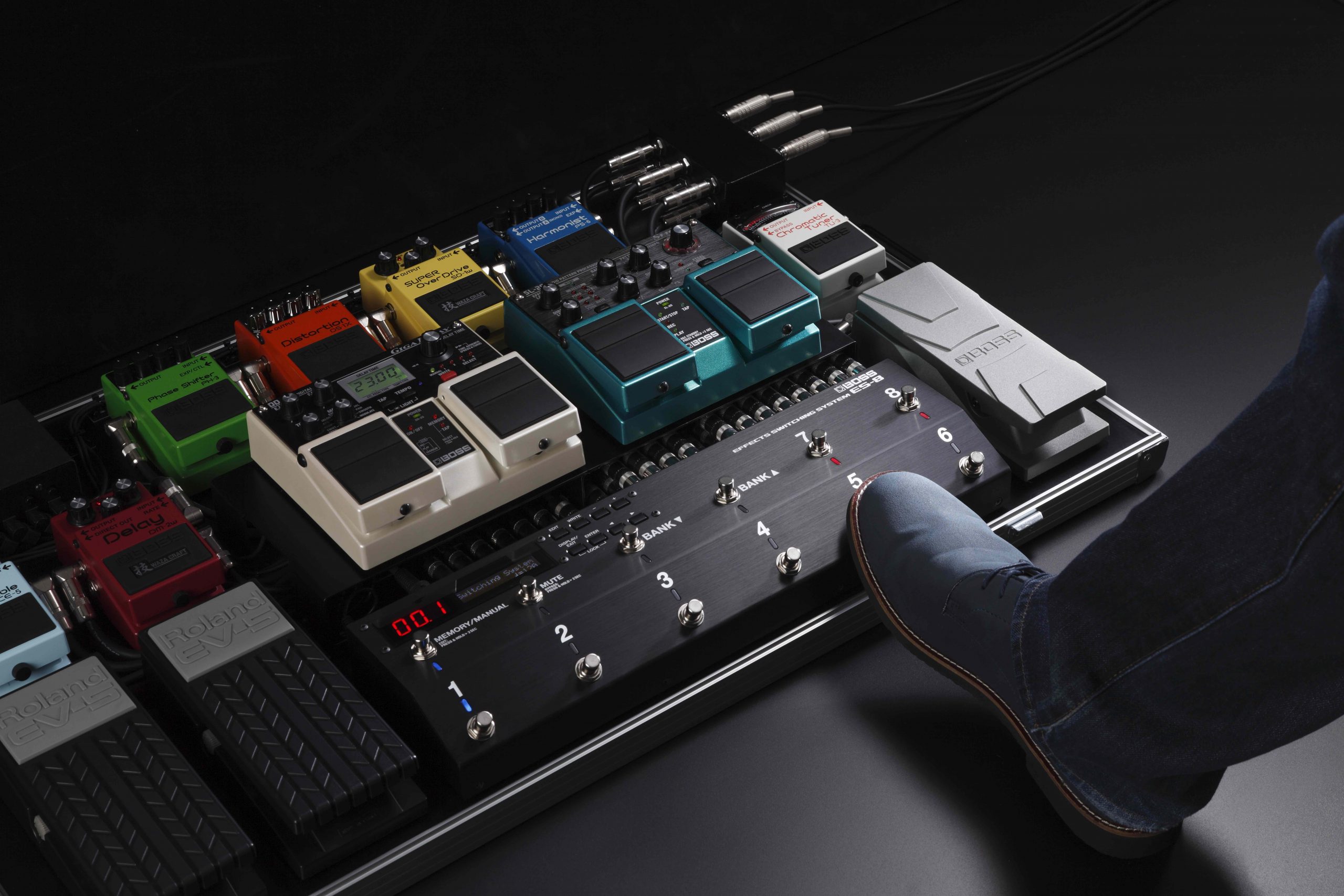
A programmable switcher lets you toggle multiple pedals connected to different loops simultaneously and save those combinations as programmable presets.
Compared to standard loop switchers, it allows for much more complex control.
- Standard Loop Switchers
Only toggle individual pedals connected to each loop on or off.
Mainly used to keep footwork neat and consolidate scattered pedal switches. - Programmable Switchers
Store ON/OFF states for multiple pedals as presets for instant recall.
Many models also offer MIDI integration and amp channel switching for advanced control.
Programmable Switchers: Pros & Cons
Pros
- One-tap tone switching for different song sections
- Prevents tone loss and signal degradation
- Minimizes downtime during unexpected gear issues
- Unlocks pedal potential through deep parameter control like MIDI
One-Tap Tone Switching for Song Sections
The biggest benefit of single-tap switching is that it lets you focus entirely on your playing while preventing footwork mistakes.
"For Verse A, step on these two pedals; when Verse B hits, turn off this one..."
Trying to memorize complex tap-dance routines while playing live can be stressful.
Eliminating that anxiety so you can perform with confidence is the single biggest advantage of a programmable switcher.
Prevents Tone Degradation
Compared to daisy-chaining pedals in series, it keeps signal loss to a minimum.
Each pedal stays isolated in its own loop, so your guitar signal passes through a much simpler path directly to the output.
Helps Handle Unexpected Troubleshooting
In a traditional series setup, a single faulty cable or pedal kills your entire guitar signal.
In short, your sound cuts out completely mid-show.
With a switcher setup, only the failed loop drops out while the rest of your board continues working normally.
Plus, it's much easier to isolate the problematic pedal or patch cable for quick troubleshooting.
Unlocks Pedal Potential with Advanced Control like MIDI
Many modern stompboxes feature advanced capabilities, including MIDI integration.
Using a programmable switcher lets you change pedal parameters on the fly, practically turning your analog setup into a multi-effects rig.
It allows you to get the absolute maximum performance out of every pedal on your board.
Cons
- Higher overall cost
- Programming can have a steep learning curve
- Adds size and weight to your board
- Less intuitive for spontaneous, on-the-fly tweaking
- Slightly colors your tone by routing through extra circuitry
Higher Overall Setup Cost
Programmable switchers themselves can be pricey, but when you factor in cabling and accessories, costs quickly add up.
Because loop routing requires more patch cables than a simple series chain, you'll need to purchase additional cables optimized for switcher layouts.
Switcher Setup and Programming Can Be Complex
Compared to series routing or simple mechanical switchers, initial programming requires extra effort.
Once you get the hang of it, it's simpler than navigating deep multi-effects menus, but players who dislike digital setups might find it intimidating.
Adds Pedalboard Size and Weight
Adding a switcher unit along with extra patch cabling increases both physical footprint and overall board weight.
You'll need to plan carefully for portability and physical space on your board.
Less Suited for Spontaneous Tweaking
While switchers excel at recalling pre-programmed setups, on-the-spot adjustments like "let me kick on this pedal right now" can be less intuitive.
Players who do a lot of jam sessions often stick with series setups for this exact reason.
Slight Tonal Influence from the Switcher
Though the difference can be subtle, your signal inevitably passes through the switcher's internal circuitry, which can slightly affect your pure guitar tone.
Some purists still prefer the direct sound of a pure series connection.
7 Recommended Programmable Switchers
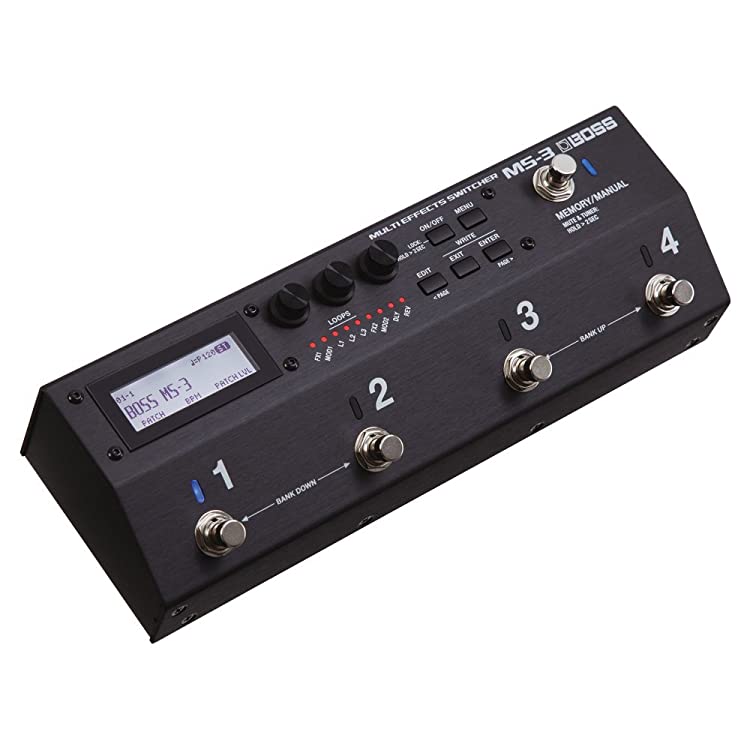
BOSS / MS-3
- Compact, integrated pedalboard solution that brings professional multi-effects capabilities into a switcher footprint
- Seamlessly combine 6 internal effect blocks simultaneously with 3 external pedal loops
- 112 built-in effects for guitar and bass including delay, reverb, modulation, pitch effects, overdrive, and distortion
- Intuitive interface featuring a backlit LCD, effect ON/OFF indicators, and edit knobs for easy navigation
- Extensive real-time control features including control assignments and wave pedal functionality
- Functions as a central rig hub with amp channel switching and external pedal control options
- MIDI OUT jack for controlling MIDI-compatible gear
- Comprehensive utility tools including tuner, global EQ, and noise suppressor
- Dedicated editor/librarian software for deep patch editing and backup
Combining a programmable switcher and a multi-effects processor into a compact footprint, the MS-3 is often considered a "cheat code" unit among pedalboard builders.
Connect your favorite drive pedals into the loops, and use the MS-3's onboard effects for delays, reverbs, and wild modulation.
This setup has become extremely popular for building compact, versatile pedalboards.
Additionally, while it features switches 1–4, you can also assign Current Number (secondary channel) functions.
For example, tapping a switch once activates your rhythm drive tone, while tapping it a second time boosts volume and engages delay for your lead sound.
It makes complex switching workflows incredibly simple.
Who is the BOSS MS-3 for?
- Players who want a compact yet powerful, feature-packed pedalboard
- Guitarists needing maximum tonal flexibility in a single rig
- Those who prefer standalone drive pedals but want multi-FX for time-based/ambient effects
Positive Reviews
Negative Reviews

Combine with the LimetoneBASE to expand up to 5 total loops!

Limetone Audio / LimetoneHOME 4LB
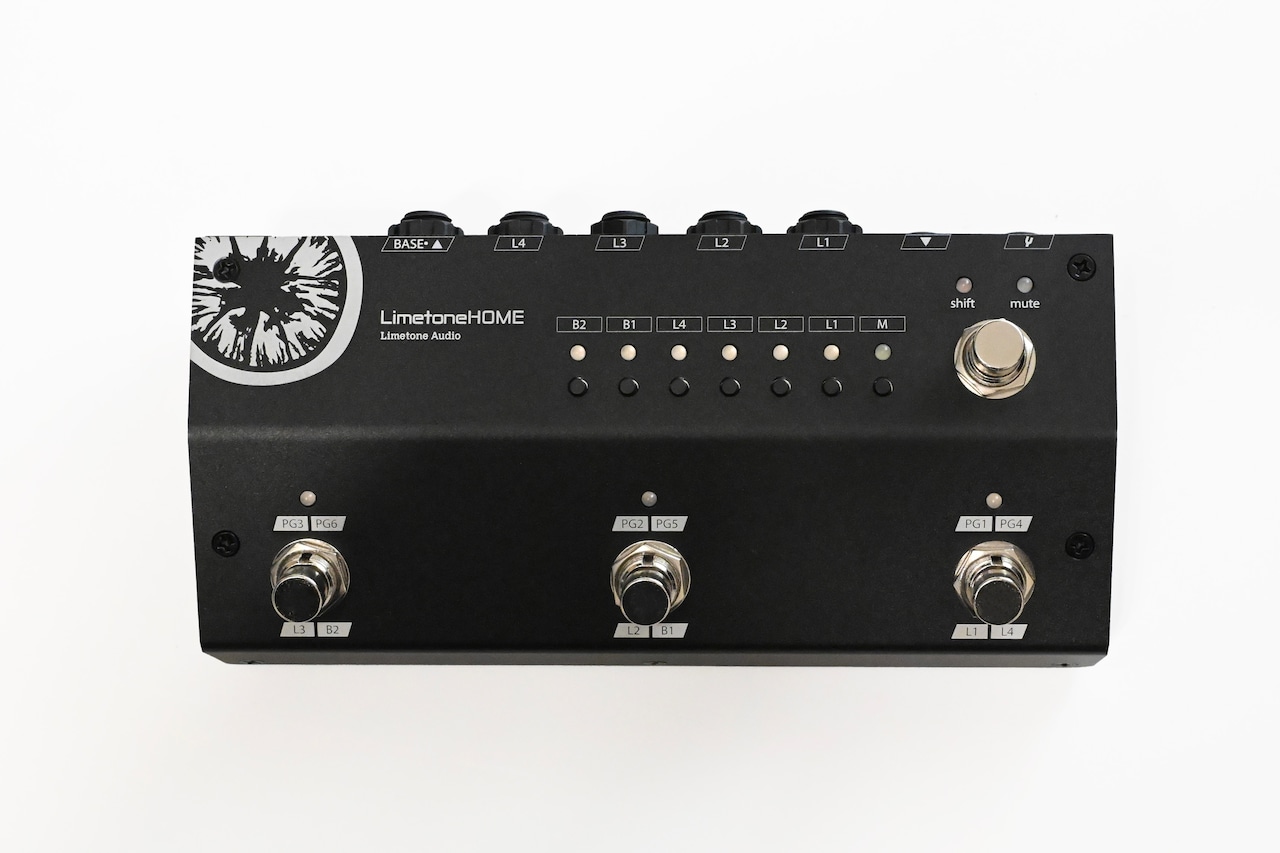
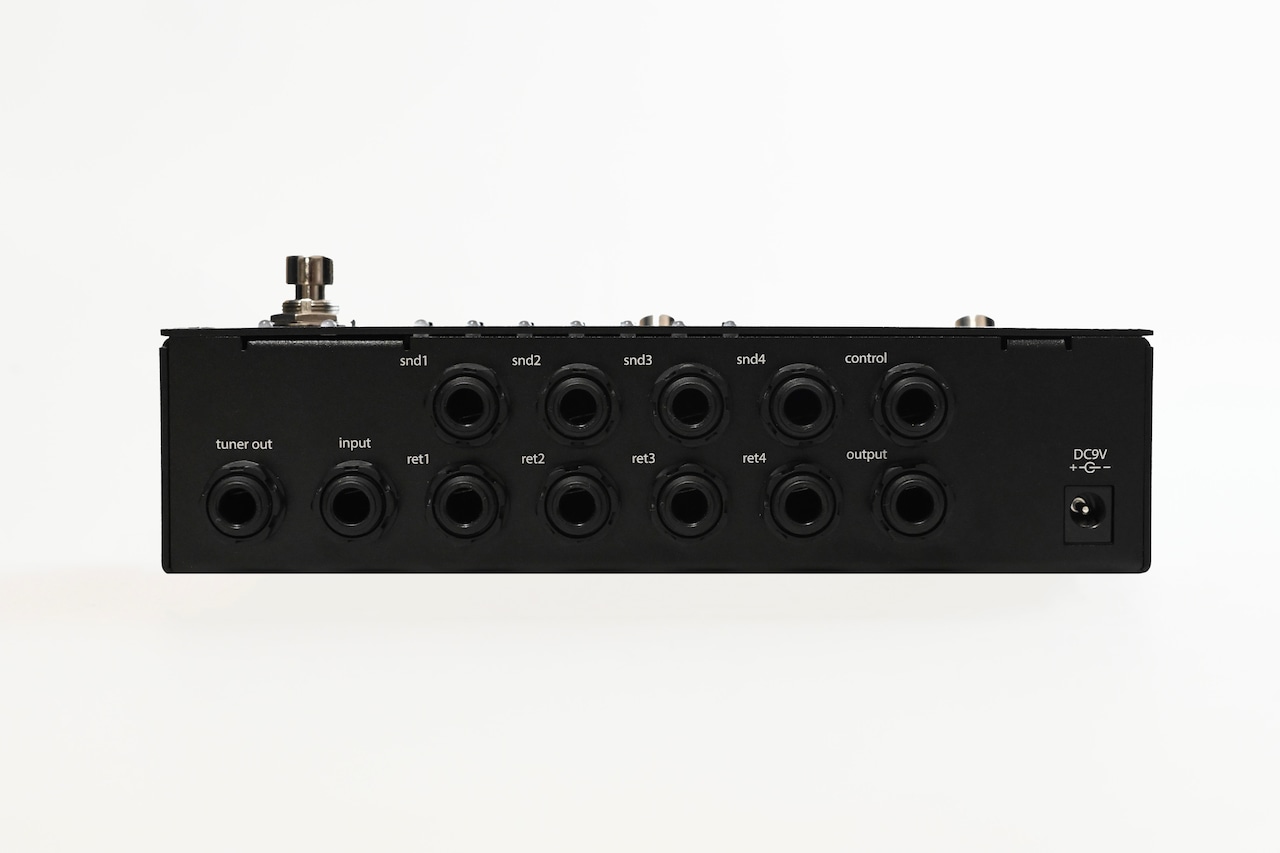
- Pure non-buffered design that preserves your core tone
- Stress-free "Auto Save" function that saves edits instantly
- Innovative "Secondary Mode" letting you assign two configurations per switch
- Expandable up to 6 loops by connecting the dedicated "BASE" unit
- Slim 183 mm chassis fits easily on compact pedalboards
- Pro-grade components and rugged build quality trusted for stage use
This unit represents Limetone Audio’s vision of their ideal loop switcher. What stands out most is its extreme transparency, eliminating the tone degradation often caused by routing through switchers. The control interface is remarkably refined—the Auto Save feature lets you program patches intuitively right from the footswitches without digging through complex menus, making it indispensable once you try it.
Another standout highlight is the "Secondary Mode." Pressing the same switch a second time recalls an alternate loop setting, expanding your options far beyond the physical 4-loop limit. Combining compact size with deep functionality, it functions as a command center tailored for modern guitarists.
Who is the LimetoneHOME 4LB for?
- Players who want to avoid tone suck and signal coloration from their loop switcher
- Players who hate digging through manuals and prefer intuitive operation
- Players with limited pedalboard space who still need complex patch switching during songs
Positive Feedback
- It is so clear that your signal almost feels improved just by plugging in. It completely ruined traditional switchers for me.
- Programming is effortless. Being able to set up patches intuitively without reading a manual makes it super user-friendly.
- Secondary Mode is incredibly useful. Setting it to stack a specific pedal for solos lets you toggle everything with a single tap.
Negative Feedback
- Current draw is on the higher side, so you’ll need a robust pedal power supply.
- Pricey for a 4-loop unit, though fair given the pristine audio quality and features. Not for budget seekers.
- Because of the compact enclosure, rear patch cable routing can feel a bit cramped depending on plug shapes.

BOSS / ES-5 & ES-8
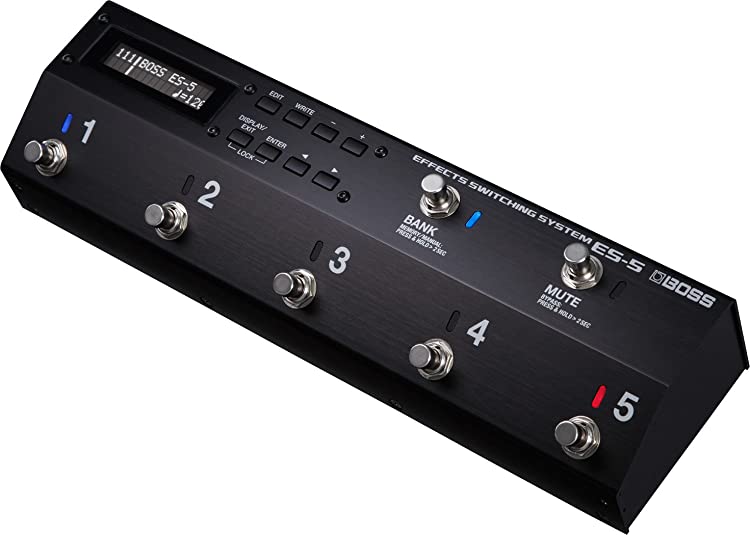
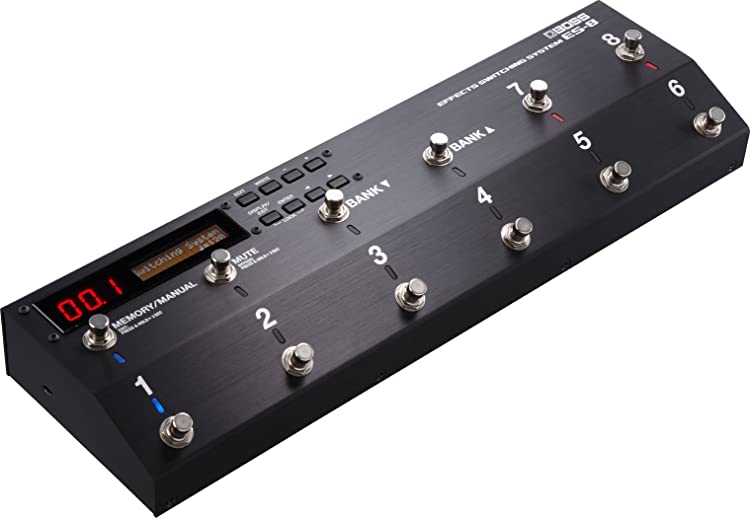
ES-5 Features
- Compact 5-loop programmable switching system
- All-analog circuit design to keep your tone pure
- Buffer on/off can be stored independently per patch memory
- Reliable footswitches with switching noise mute functionality
- Flexible routing features, including spillover and reordering effect chains (supports parallel loops)
- Backlit LCD screen displaying patch numbers and names
- 200 patch memories, providing ample capacity for long setlists
- Centralized control for external gear parameters in addition to loop on/off
- Fully customizable switch control assignments per patch
ES-8 Features
- 8-loop programmable switching system (plus an additional loop for volume pedal connection)
- Analog circuit design focused on keeping tone pure
- Independently switchable input and output buffers (output buffer features variable gain level)
- Reliable footswitches with switching noise mute functionality
- Unprecedented routing flexibility to freely change pedal connection order (supports parallel effect chains)
- 7-segment LED display for patch numbers and backlit LCD for patch names
- Generous 800-patch memory capacity for touring musicians
- Centralized control over external effects parameters
- Fully customizable control assignments for each footswitch
- Version 2.00 firmware with dedicated software editor support
The defining feature of the BOSS ES series is its routing capability.
You can freely reorder the connection sequence of connected pedals within your preset patches.
For example, in Preset A, you can place a boost pedal before a drive pedal to push both gain and volume. In Preset B, you can position the boost after the drive pedal to raise volume only.
Doing that manually by rewiring patch cables on a board would be a huge hassle.
In addition, footswitch functions are highly customizable. If you do not use the mute switch, you can easily reassign that switch to control another parameter.
Who are the BOSS ES-5 & ES-8 best for?
- Players who want to swap pedal signal order per preset or bank
- Guitarists looking to fully customize switch assignments to match their workflow
- Those who demand pure analog signal paths along with programmable switcher convenience
Positive Feedback
- Being able to freely change pedal connection order is game-changing. You can experiment effortlessly without rewiring your pedalboard.
- Built extremely tough. It provides peace of mind on tour without any fear of breakdown.
- Strong integration with expression pedals. Controlling wah or pitch shifters is completely handled by this single unit.
Critical Feedback
- The housing is surprisingly tall, so back-row switches can be slightly tricky to press on flat pedalboards.
- Programming feels somewhat computer-like, which may take some getting used to when navigating the small LCD screen.


Free the Tone ARC-53M
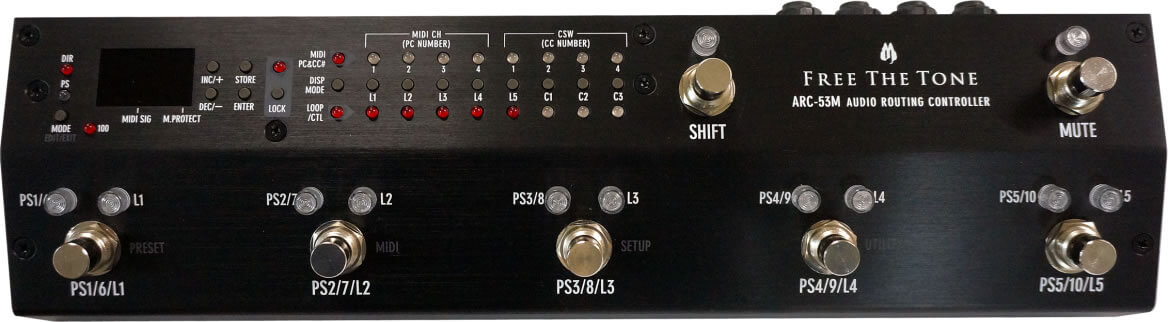
- Pro-grade tone quality, durability, and low-noise performance
- Built-in Free the Tone HTS Circuit
- Effects loops: 5 (4 series loops, 1 separate loop)
- Presets: 20 banks x 10 presets (200 total presets)
- Control outputs: 3 (switchable between latch and momentary)
- Input impedance: 1 MΩ (HTS-IN)
- Output impedance: 200 Ω or less (OUT)
Built by Free the Tone—a brand trusted by working pros—drawing on years of custom rig-building expertise.
It hits a sweet spot between compactness, loop count, and generous preset memory.
What stands out most is the exceptional signal stability and audio quality delivered by their proprietary HTS circuit.
The Free the Tone ARC-53M is ideal if:
- You prioritize pure tone and build quality over gimmick features
- You appreciate Free the Tone's engineering and design philosophy
- Five loops are the right fit for your pedal count and pedalboard layout
Positive Reviews
- The audio quality is genuinely pro-grade. The built-in buffer works wonders, cleaning up and clarifying the signal just by patching it in.
- Thanks to the HTS circuit, there is zero switching noise. You can use it in the recording studio with complete confidence.
- The angled control panel makes it easy to read on stage and minimizes missteps. Visibility is outstanding.
Negative Reviews
- Because of its comprehensive feature set, getting the hang of MIDI routing and setup requires some time and knowledge.
- As a high-end unit, the price tag is steep, making it a bit of a hurdle for beginners.

Free the Tone / ARC-4
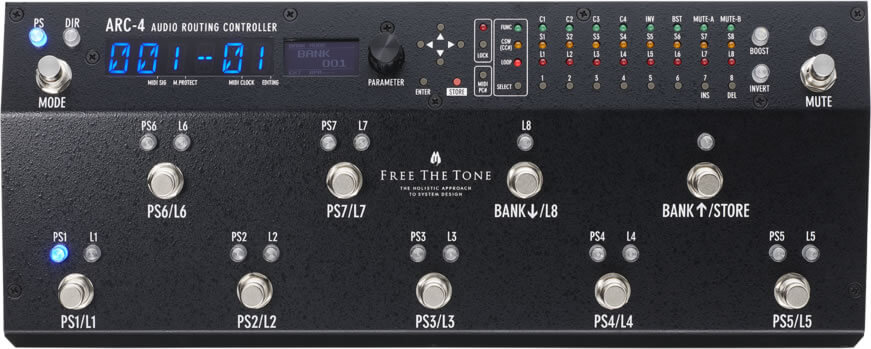
- Pro-grade audio quality, durability, and noise performance
- Number of loops: 8 (Series loops: 5 mono / 2 stereo, total 7; Separate loop: 1)
- Presets: 2,000 total (200 banks x 10 presets)
- Control outputs: 4 (switchable latching/momentary)
- Input impedance: 1 MΩ (HTS-IN)
- Output load impedance: 10 kΩ or higher (HTS-OUT / OUT-A / OUT-B)
- Boost range: 0 to +14 dB
The ARC-4 is Free the Tone's flagship audio routing controller.
It comes packed with feature-rich routing power, including stereo loops, a built-in boost function, phase invert capabilities, bank selection, and a setlist mode.
Designed for high-end stage and studio use, it is a professional-grade programmable loop switcher loaded with practical tools for demanding real-world setups.
Who is the Free the Tone ARC-4 for?
- Players building complex pedalboard rigs and signal routing
- Those who demand pro-level build quality and performance
- Tone purists looking for minimal noise and maximum signal clarity
Positive Reviews
- "Audio engineers complimented my tone right after I added this. The buffer quality is on another level."
- "Incredibly customizable. Flexible MIDI command transmission solved all my routing and rig integration headaches."
- "The switch action feels fantastic. Ultra-fast response means zero latency or distraction while playing live."
Negative Reviews
- "It's large and heavy, so you definitely need to plan around the size and weight when transporting your board."
- "So feature-packed that unlocking its full potential requires a bit of a learning curve."

One Control / Crocodile Tail Loop OC10
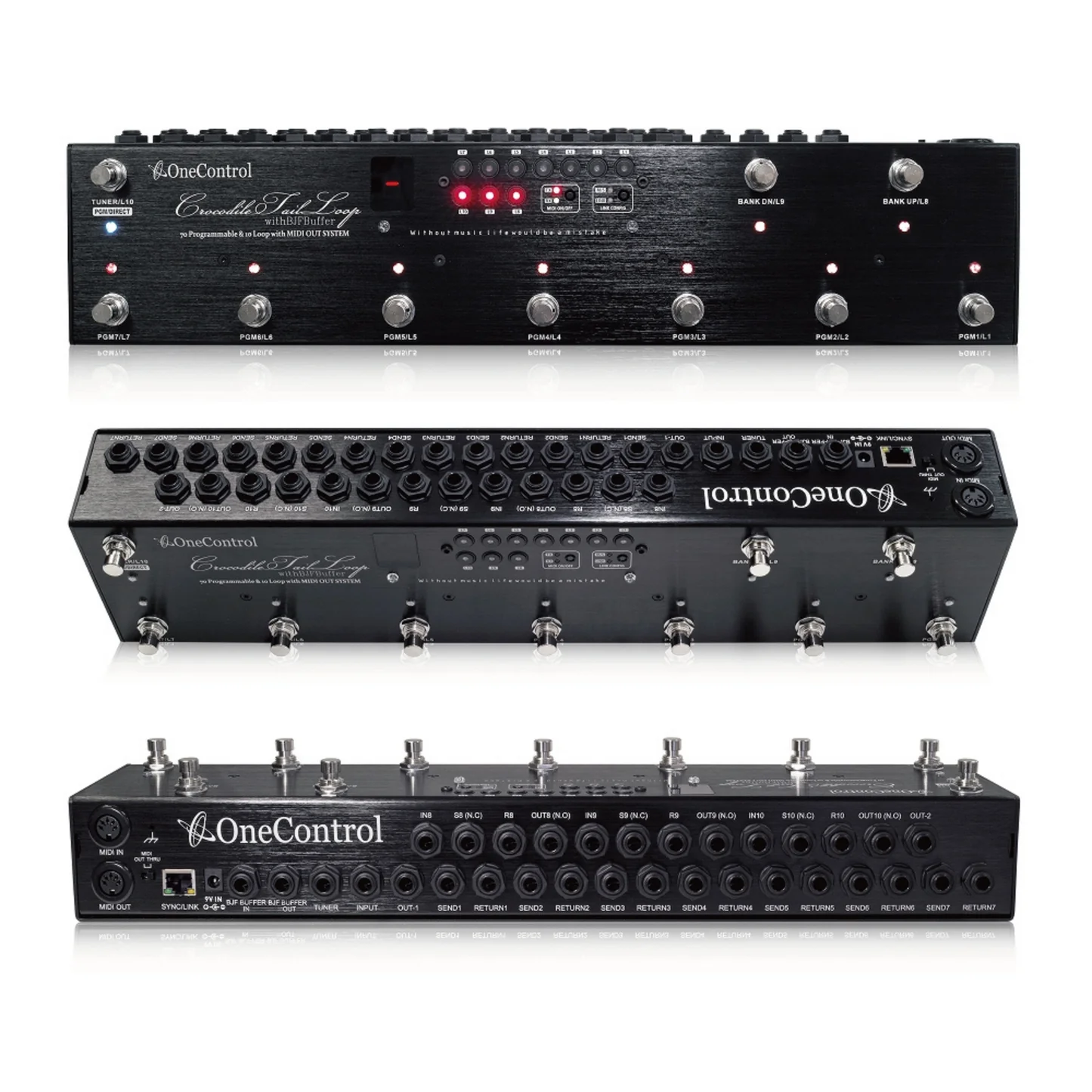
- Connect up to 10 pedals
- Save up to 70 preset programs
- Visual and intuitive programming
- Equipped with buffered/unbuffered inputs and a tuner out
- Functions as a standard switcher using Direct Mode
- Separate loops can also be used for amp channel switching
- Supports MIDI control
- Link two Crocodile Tail Loops for expanded control options
Delivering top-tier functionality and audio clarity, it stands out from other switchers on the market by offering high-end capabilities in a compact, lightweight, and affordable design.
By streamlining the design—reducing the number of buttons and eliminating complex LCDs—One Control simplified operation and cut costs while keeping control remarkably intuitive and visual.
Crocodile Tail Loop OC10 is ideal for players who:
- Are building a large pedalboard
- Care more about value than extra features
- Want a straightforward, easy-to-use switcher
Positive Feedback
- An incredible value for 10 loops. Setup was so simple I had my board ready the day it arrived.
- The buffer sound is very natural. It doesn't sound digital or thin, letting the full quality of analog pedals shine through.
- The link feature is great. It offers excellent scalability if I expand my pedalboard down the road.
Critical Feedback
- Because it's fairly wide, it limits the size of pedalboards you can use.
- Compared to complex high-end switchers, detailed MIDI settings (like sending CC messages) are somewhat limited.
