
日本語English
Fractal Audio Axe-Fx III vs. FM9 Turbo vs. FM3 Turbo: Differences, Comparison, and How to Choose
XTONES is a participant in affiliate programs including Amazon Associates and Reverb. We may earn a commission from qualifying purchases made through links on this page, at no extra cost to you.
Contents (22)
Fractal Audio Systems is a renowned brand of high-end modeling processors, widely trusted by professional guitarists and studio creators alike.
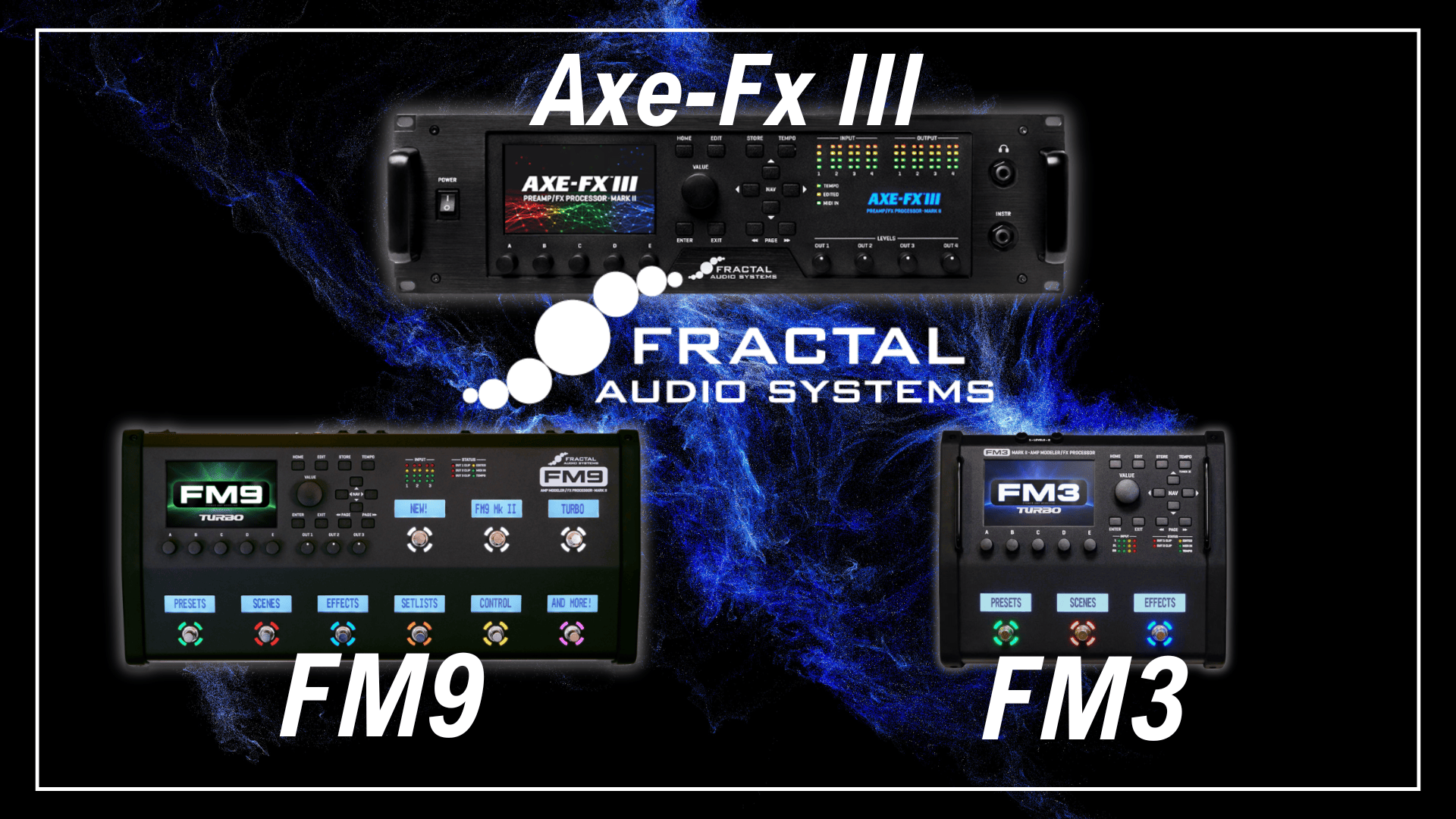
Its flagship lineup of three key models—Axe-Fx III Mark II Turbo, FM9 Turbo, and FM3 Turbo—all run on the same Cygnus amp modeling architecture, but they vary significantly in processing power, physical size, hands-on control, and price.
- “Which model fits my setup?”
- “I need something for live gigs, but I don't want to compromise on recording tone.”
- “What's the best balance of performance and budget?”
To help answer these questions, this guide presents an objective side-by-side comparison of all three models so you can pinpoint the right processor for your needs.
We also highlight player feedback—covering key pros and cons—to ensure you make an informed choice.
By the end of this article, the key differences across Fractal Audio's three units will be clear.
Fractal Audio | Model Lineup Overview
Specs comparison
 |  |  | |
|---|---|---|---|
| Model | Axe-Fx III Mark II Turbo | FM9 Turbo | FM3 Turbo |
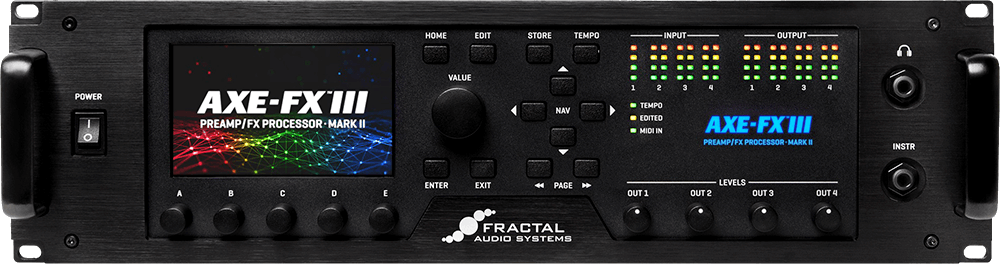
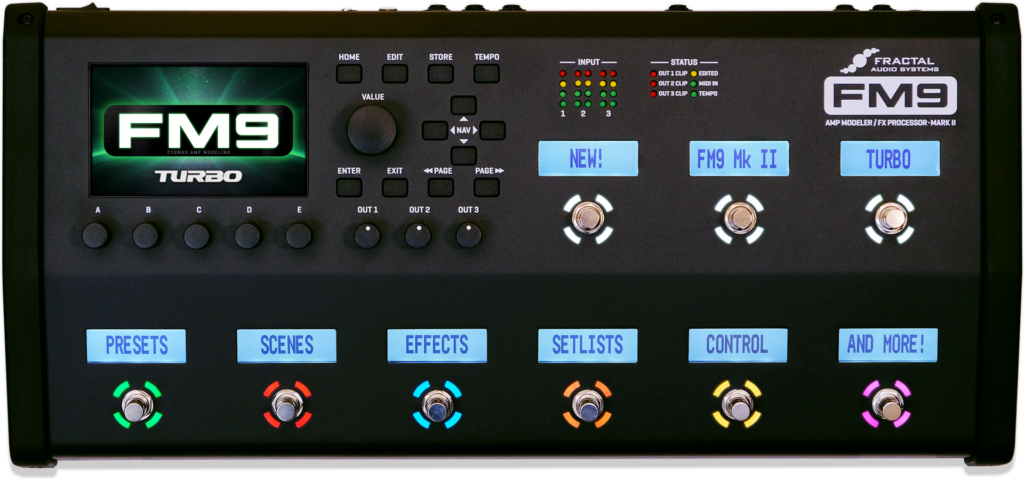
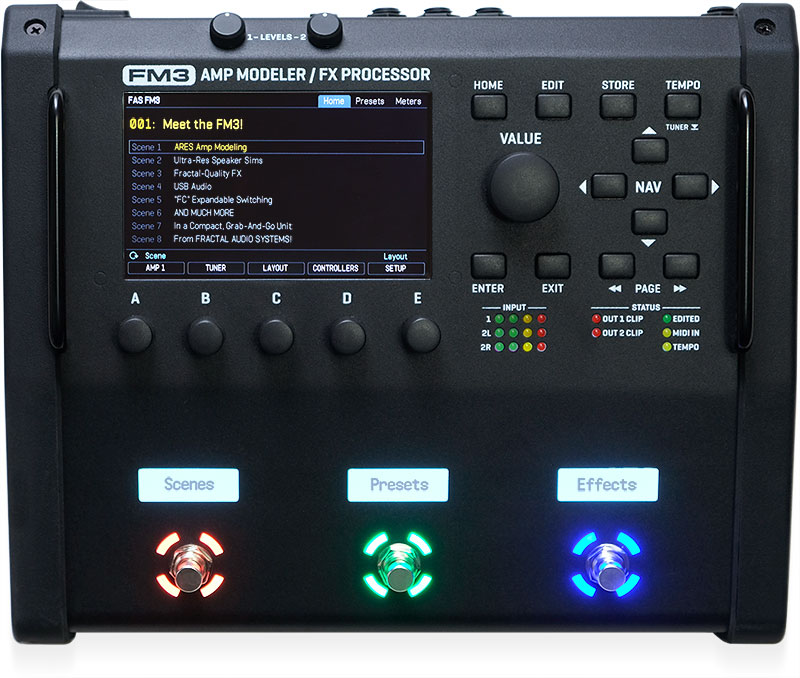
| Format | Rackmount (3U) | Floor unit (9 switches) | Floor unit (3 switches) |
| Dimensions | Approx. 48 cm × 13 cm × 29 cm | Approx. 51 cm × 8.9 cm × 23.7 cm | Approx. 28 cm × 10.3 cm × 23.6 cm |
| Weight | Approx. 6.9 kg | 5.4 kg | Approx. 3.3 kg |
| DSP Power | Dual-core TI DSP (+25% on Turbo) | Dual-core × 2 (+10% on Turbo) | Dual-core × 1 (+10% on Turbo) |
| Amp Blocks | Up to 2 simultaneous | Up to 2 simultaneous | Up to 1 |
| Cab Blocks | 2 blocks (Blend up to 8 IRs, FullRes support) | 2 blocks (Blend up to 4 IRs) | 1 block (Blend up to 2 IRs) |
| Effects Capacity | Extensive simultaneous effects (virtually unlimited) | High simultaneous effect count | Limited simultaneous effects (CPU-dependent) |
| Analog I/O | 4 Ins / 4 Outs (XLR & 1/4") | 3 Ins / 3 Outs | 2 Ins / 2 Outs |
| Digital I/O | AES/EBU + S/PDIF (In/Out) | S/PDIF (In/Out) | S/PDIF (Out only) |
| USB Audio | 8 in / 8 out | 8 in / 8 out | 4 in / 4 out |
| Footswitches | None (Requires external FC) | 9 switches | 3 switches |
| External Control | Up to 4 FCs 2 expression pedals | Up to 2 FCs 3 expression pedals | Up to 2 FCs 2 expression pedals (2× TRS) |
| Approx. US street | $2,500 | $1,800 | $1,100 |
Approx. US street prices are rounded retailer prices as of November 6, 2026, before sales tax. Not a live quote.
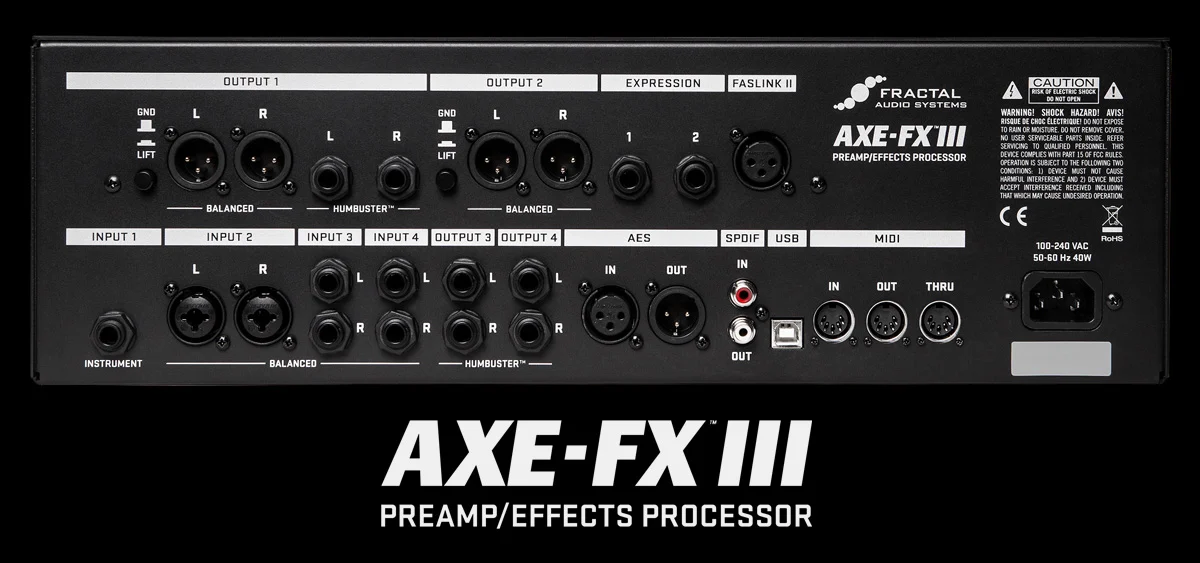
Axe-Fx III Mark II Turbo – Flagship Rackmount Model
- 3U rackmount format (no onboard footswitches)
- Massive DSP processing headroom (+25% boost in the Turbo version)
- Run up to 2 amp blocks, 2 cab blocks, and multiple effects simultaneously
- 4 stereo input/output channels plus extensive digital I/O
- Proprietary tools including Tone Match, IR Capture, and FullRes IR support
- Supports optional foot controllers (FC-6 / FC-12)
- Built to cover home recording, commercial studios, and major touring rigs
The top-tier rackmount processor in Fractal’s lineup.
Loaded with top-spec DSP capacity and versatile I/O, it is built for demanding professional studio recording and touring applications.

FM9 Turbo – 9-Footswitch Floor Unit
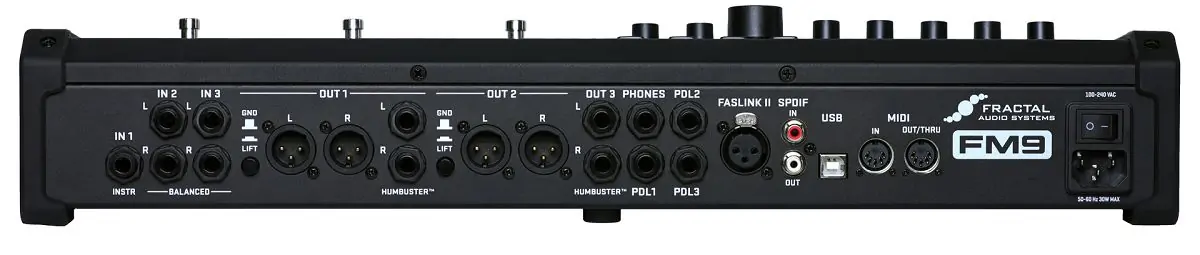
- Floor unit featuring 9 footswitches
- Quad-core DSP for high simultaneous processing power (Turbo version adds over +10% DSP)
- Run 2 amps, 2 cabs, and extensive effects simultaneously
- Same audio quality and algorithms as the Axe-Fx III
- Gig-ready as a standalone rig, plus 8-in/8-out USB for home recording
- Weighs around 5.4 kg (11.9 lbs), on the larger side
- Widely praised as the most balanced, practical powerhouse in the lineup
A high-end floor unit.
Gig-ready with 9 footswitches, it delivers processing power and expandability near the Axe-Fx III in a well-balanced, versatile package.

FM3 Turbo – Compact Model with 3 Footswitches
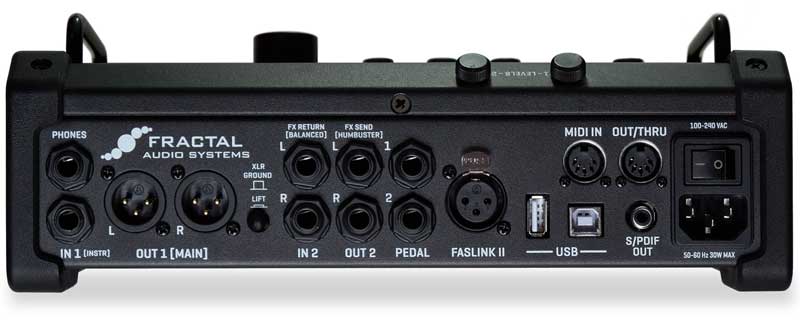
- Compact floor unit with 3 footswitches
- Dual-core DSP (+10%+ performance boost with Turbo)
- Runs 1 amp, 1 cab, and essential effects simultaneously
- 4-in/4-out USB audio interface ideal for home recording
- Compact and highly portable, weighing about 3.3 kg
- Expandable control via external footswitches and expression pedals
- Popular choice as an entry-level unit, backup rig, or grab-and-go setup
Fractal's smallest and lightest compact model.
Ideal for home recording and streamlined live setups, making it a great entry point into Fractal.

Fractal Comparison | Footswitch & User Interface Differences
Axe-Fx III – Front Panel & Software Control
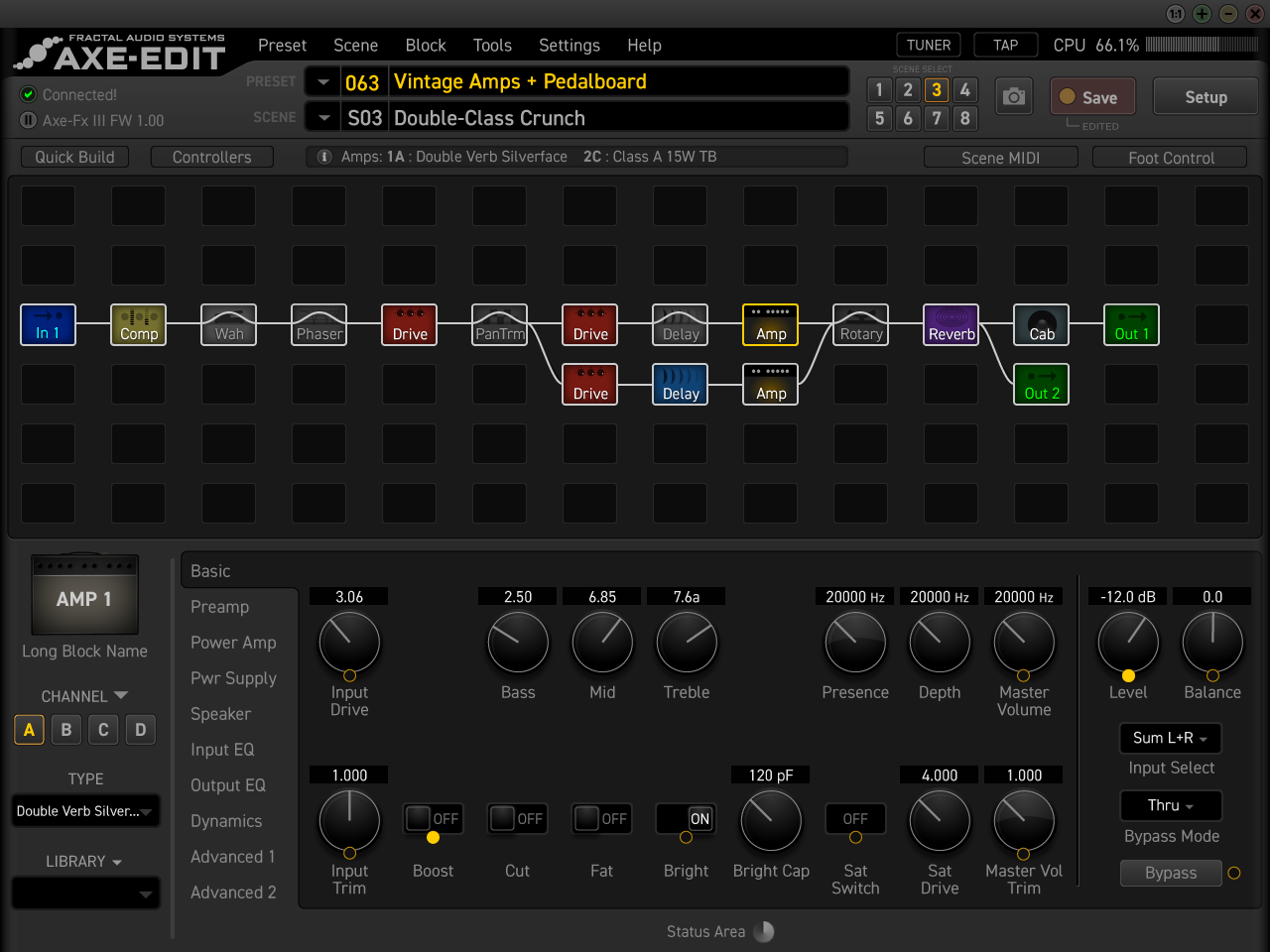
The Axe-Fx III has no built-in footswitches, but its large LCD display and five encoder knobs allow for intuitive front-panel operation.
Additionally, Fractal's official computer editor (Axe-Edit) supports all models, enabling visual drag-and-drop routing.
Building presets and editing complex signal chains on your computer makes up for the lack of hardware footswitches on the unit itself.
FM9 – Versatile Layouts via 9 Footswitches
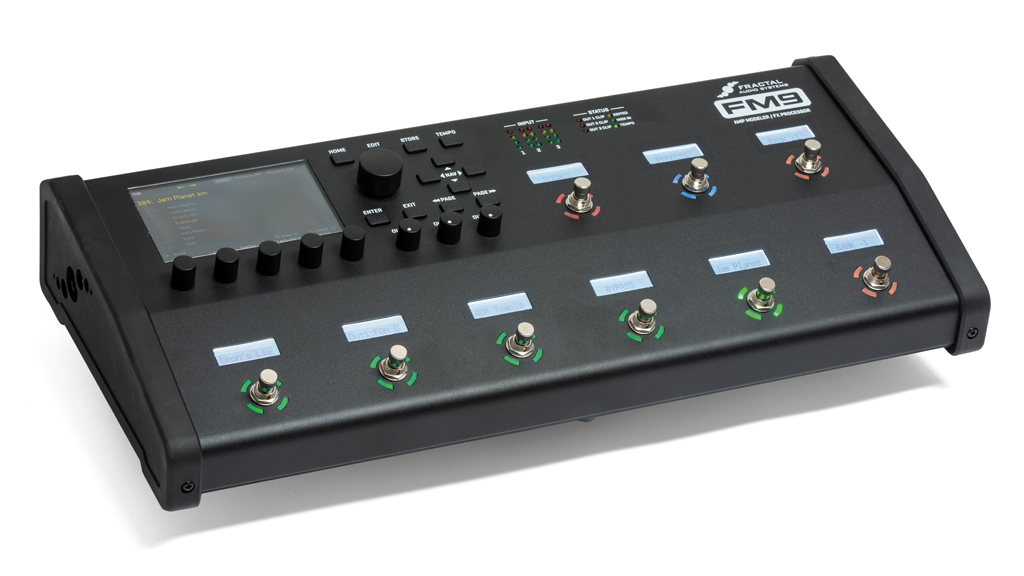
The FM9 features nine footswitches, each supporting dual tap and hold functions.
Color LED rings and mini LCD displays make it easy to see each switch's current assignment at a glance.
With its Layout feature, you can flexibly assign scene switches, preset recalls, and effect bypass states.
Both in usability and visibility, it delivers dependable performance on stage.
FM3 – Navigation Built Around 3 Footswitches
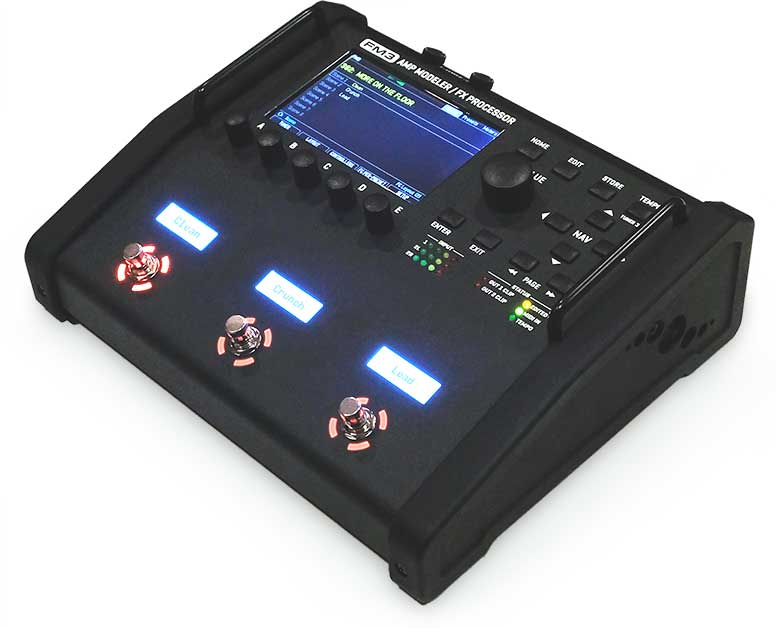
Because the FM3 has only three footswitches, setup relies heavily on switching between operating modes.
- Switch A: Preset / Bank Select mode
- Switch B: Scene Select mode
- Switch C: Effect Toggle mode
This design assigns multiple roles to each physical footswitch.
However, some players find hold functions tedious or distracting during live performances, so adding an external footswitch controller (like the FC-6) can streamline performance workflow.
Fractal Comparison | Sound Quality & Audio Differences
Sound quality across all Fractal Audio models is exceptionally high.
Driven by the Cygnus modeling engine, they reproduce the feel and dynamic picking response of real tube amps.
Core Audio Engine is Identical
- Includes over 289 amp models across all units.
- Uses the same impulse response (IR) format throughout.
- When loading identical presets, there is virtually no difference in sound quality between the FM3 and Axe-Fx III.
Axe-Fx III
FM9 Turbo
FM3 Turbo
Algorithm Differences (FM3 Limitations)
- The Axe-Fx III and FM9 run full, uncompromised algorithms.
- Due to CPU limitations, the FM3 occasionally relies on streamlined or earlier algorithm versions for select blocks.
For example, high-density reverbs or advanced pitch shifters may run in simplified modes on the FM3.
Limits on Pitch Shifting & Polyphonic Processing
- On the FM3, intense processing like Virtual Capo can introduce slight latency or audio artifacts.
- Pitch block tracking is also slightly less snappy compared to the Axe-Fx III and FM9.
A/D and D/A Conversion Performance
- All models operate at 24-bit / 48 kHz with approximately 114 dB dynamic range.
- Input/output noise is exceptionally low, earning Fractal a reputation for being quieter than competitors.
Headphone Output
- Starting with Mark II revisions, all FM3, FM9, and Axe-Fx III units feature built-in headphone outputs.
- Ready for quiet home practice and home recording right out of the box.
Fractal Comparison | Player Feedback & Reputation
Axe-Fx III
- "Authentic amp tone and response"
→ Players praise its dynamic feel and expressiveness, which easily stand up to real tube amps. - "Incredibly useful for recording and production"
→ Studio features like Tone Match and IR Capture earn high marks for workflow efficiency. - "Extensive I/O offers incredible setup flexibility"
→ Ideal for pro rigs requiring multiple outputs and dual effects loops. - "Rackmount security and reliability"
→ Keeping the brain off the floor protects the core unit from accidental spills or damage. - "Separating the main unit from the footswitch is a huge plus"
→ Keep the processor offstage or in a rack while keeping your pedalboard footprint minimal.
- "Very expensive"
→ Adding a foot controller drives the total investment quite high, making it a serious commitment for casual players. - "Bulky, heavy, and requires dedicated rack space"
→ Can be a hurdle if you don't already have a rack case or studio rack setup. - "Less convenient standalone for live gigs"
→ You can't switch presets with your feet without buying an optional FC controller.
FM9
- "Best overall balance"
→ Many players call it the best model given its balance of sound quality, performance, controls, and price. - "Gig-ready right out of the box"
→ The 9 switches handle all controls directly, making it ready for live performance without external footswitches. - "Sound on par with the Axe-Fx III"
→ Sharing the same algorithms and IR capabilities, most players notice virtually no difference in audio quality. - "Pro guitarists are switching to the FM9"
→ Players like Guthrie Govan and Neal Schon use the FM9 live. - "Great for home recording with high-performance USB audio"
→ 8-in/8-out USB audio interface functionality makes reamping seamless.
- "A bit heavy"
→ At around 11.9 lbs (5.4 kg), it is on the heavier side for a floor unit. Some find it inconvenient for frequent transport. - "Was hard to get for a while"
→ Faced long pre-order waitlists right after release, though availability has improved. - "Limits on external expansion"
→ Supports adding up to two FC controllers, making it slightly less flexible than the Axe-Fx III.
FM3
- "Incredible quality in a small footprint"
→ Many players find this single unit complete enough if running just one amp model. - "Most accessible price point"
→ An ideal entry point for players getting into the Fractal ecosystem for the first time. - "Extremely portable"
→ Weighing just 3.3 kg, it easily fits into a backpack for quick transport. - "More than enough built-in effects"
→ Covers drives and time-based effects, easily handling home recording and smaller gigs. - "Control options expand via external switches"
→ Supports additional switches via TRS jacks for custom expansion down the line.
- "Limited footswitches make live switching tricky"
→ Heavy reliance on hold functions and page switches can feel less intuitive on stage. - "DSP limits exist"
→ Complex ambient patches or heavy signal chains can run into CPU limits. - "Some effects are simplified"
→ Pitch shifting and reverb use simplified algorithms compared to higher-end models. - "Expanding it gets expensive"
→ Adding an FC foot controller can bring total costs close to an FM9.
Fractal Comparison: How to Choose by Application
For Live Performance
FM9 Turbo
→ Equipped with 9 switches, handling live shows completely on its own.
→ High visibility and flexible layout switching give complete peace of mind on stage.
→ Players note: "It covers 99% of everything I need."
FM3 Turbo
→ Lightweight, compact, and easy to carry.
→ Fewer switches, but easily expandable with external controllers.
→ Ideal for smaller gigs or tight stage footprints.
Axe-Fx III Mark II Turbo
→ Ready for live use when paired with optional FC-6 or FC-12 foot controllers.
→ Excels at complex routing and multi-output setups.
→ Rackmount design lets you keep the core processing unit safely off-stage.
For Home Recording & Studio Use
Axe-Fx III
→ Packed with production-focused features like Tone Match and IR Capture.
→ USB 8-in / 8-out with extensive I/O for flexible recording setups.
→ Rackmountable design makes it ideal for permanent studio rigs.
FM9 / FM3
→ High-performance USB audio interfaces in their own right.
→ FM9 offers plenty of headroom for recording track counts and processing IRs.
→ FM3 delivers uncompromising audio quality in a minimal footprint.
The consensus among users often boils down to this:
"If it's strictly for home recording, get the Axe-Fx III. If you play live, get the FM9."
That simple takeaway captures the real-world experience of many Fractal users.